License: EC0001452

How to Choose the Right Commercial Generator for Your Business
For any business, a power outage is more than just an inconvenience—it’s a direct threat to operations, revenue, and reputation. For industries like healthcare, finance, and data centers, downtime can cost thousands of dollars per minute and even compromise safety . A reliable commercial generator is the first line of defense against these risks. But choosing the right system is a significant investment that requires careful planning. Here’s a comprehensive guide to help you select and install the ideal commercial generator for your needs.
Step 1: Assess Your Power Needs
The most critical step in choosing a generator is correctly sizing it for your facility’s load. Under sizing your generator can cause overloads and failure during an outage, while oversizing leads to higher costs and wasted fuel.
To avoid this, work with a professional to perform a thorough load calculation. This analysis goes beyond a simple breaker count and considers the inrush current required to start heavy equipment like HVAC systems and elevators, which can be significantly higher than their running power . You must also decide whether you need to power your entire facility or only essential systems.
Understanding power ratings is also key:
- Standby Power: For emergency use during utility outages with limited annual runtime.
- Prime Power: For continuous operation with variable loads, allowing for short-term overload capacity.
- Continuous Power: For constant, non-varying loads with no overload capability, often used for isolated grids.
Step 2: Understand Commercial vs. Residential Generators
While they serve the same purpose, commercial generators are fundamentally different from residential models. They are built with much higher power outputs, stronger components, and the durability required for demanding, continuous operation. For example, a commercial unit might range from 800 to over 1,000 kW, while residential standby generators typically range from 10 kW to 26 kW . This distinction underscores the need for professional expertise in choosing equipment that matches your business’s scale.
Step 3: Choose the Right Generator Type
Commercial generators come in several configurations to suit different business needs :
- Standby Generators: Permanently installed units that automatically start during an outage via an automatic transfer switch (ATS). They are ideal for businesses that cannot afford any downtime.
- Portable Generators: Smaller, manually operated units suitable for temporary use or powering a few essential items at small businesses or job sites.
- Industrial Generators: Robust, high-output systems designed for continuous, critical-duty applications in environments like manufacturing plants or data centers.
For most fixed-location businesses, a commercial standby generator is the best choice for seamless power protection.
Step 4: Evaluate Fuel Types
The fuel you choose will affect installation cost, runtime, emissions, and operational resilience. Common options include:
- Diesel: Offers high energy density and is reliable for immediate power. It’s a standard choice for heavy-duty applications.
- Natural Gas: Provides cleaner emissions and a continuous fuel supply if connected to a utility line, making it a practical choice for many businesses.
- Propane: Excellent for long-term storage and quieter operation. It’s a clean-burning fuel that is often a reliable choice during extreme weather events.
Step 5: Plan the Installation and Professional Support
The most powerful generator is useless if it’s not installed correctly. Professional commercial generator installation is a complex project that requires careful planning and execution.
The Importance of Professional Installation
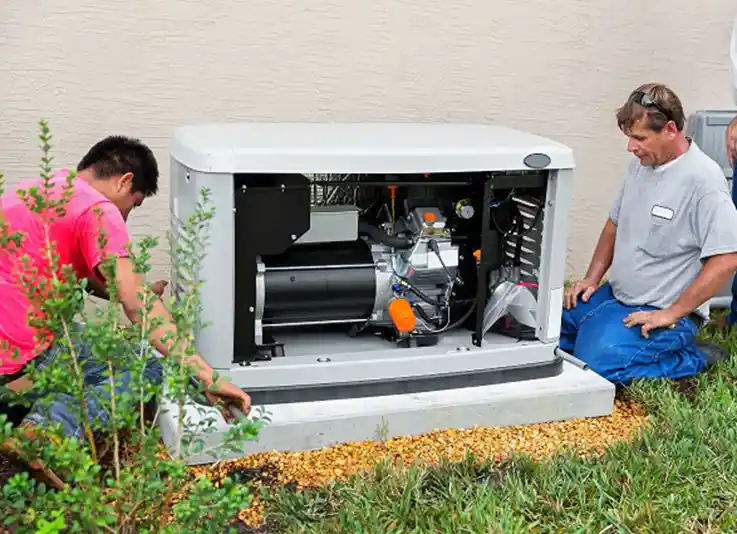
Poor installation can lead to equipment failure, unsafe operation, and voided warranties. A professional installation includes:
- True Site Assessment: Evaluating your location for proper ventilation, clearance, noise compliance, and access for fuel deliveries and maintenance.
- Permitting and Approvals: Navigating local codes and regulations to avoid fines and rework.
- Concrete Pad and Placement: Providing a stable base for the permanent unit.
- Wiring and Transfer Switches: Securely connecting the generator to your electrical panel via an ATS, which ensures a seamless power transfer within seconds of a blackout.
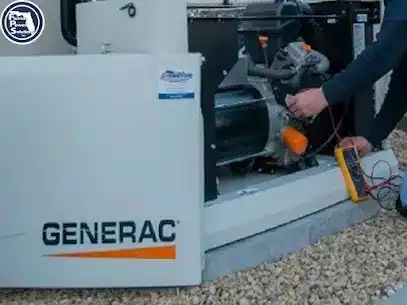
Crucial Mistake: One of the most common and dangerous errors is failing to perform a real load test after installation. A simple no-load startup only proves the engine can turn on. A certified professional will conduct a load bank test, applying a controlled electrical load to verify that the entire system works under stress, validate cooling systems, and confirm performance at rated capacity.
Committing to Maintenance
A generator that sits untouched for months is a liability, not a backup plan. You must invest in a regular maintenance program that includes routine testing, fluid checks, battery inspections, and filter replacements. This ensures your system will fire up without hesitation when you need it most.
Final Thoughts
Choosing the right commercial generator is a decision that impacts your business’s safety, reputation, and bottom line. By accurately assessing your power needs, selecting the right equipment and fuel type, and, most importantly, engaging a certified professional for a complete installation and testing, you are investing in true business resilience. For businesses in areas like Sarasota, working with an experienced local provider with a proven track record is an essential part of the process.
Need the electrical side handled too? Our commercial electrical contractors in Sarasota install the transfer switch, panel upgrades and wiring your generator needs.