License: EC0001452

Generator Load Bank Testing: Why Is It Important for Commercial Facilities?
For any commercial facility—whether it is a hospital, data center, manufacturing plant, or high-rise office building—a standby generator is the silent guardian of business continuity. It sits idle for weeks or months, waiting for the moment the grid fail. But here is the uncomfortable truth: starting is not the same as performing. A generator that turns on during a monthly exercise proves almost nothing about its ability to carry your facility’s full electrical load during a real crisis.
This is where Generator Load Bank Testing becomes critical. It is the only way to prove that your backup power system can deliver rated power under real strain. Furthermore, when paired with modern Generator monitoring services, load bank testing transitions from a once-a-year chore into a data-driven reliability strategy. This article explores why load bank testing is indispensable for commercial facilities and how monitoring services maximize its value.
What Is Load Bank Testing and Why Does It Matter?
A load bank is essentially a giant, controllable artificial load—often described as a massive toaster—that converts electrical output into heat . During a test, technicians connect the load bank to your generator and apply load in controlled steps (typically 25%, 50%, 75%, and 100% of the nameplate rating). This forces the generator to produce real kilowatts and reach full operating temperature, simulating the exact conditions of a utility outage .
Why is this necessary? Most commercial generators only run under light load during their monthly exercise. This “light-load running” creates a dangerous phenomenon called wet stacking in diesel engines. When combustion temperatures remain too low, unburned fuel and carbon accumulate in the exhaust system, glazing cylinders and fouling turbochargers . Over time, this buildup robs the engine of the output you are counting on. Load bank testing raises combustion temperatures high enough to burn off these deposits, restoring engine health and verifying that the generator can actually perform when lives and revenue depend on it .
The Risks of Skipping Load Bank Testing
Many facility managers assume that because their generator starts every month, it will work in an emergency. This assumption is a gamble with catastrophic stakes.
Hidden Failures Under Load: A generator can pass a no-load exercise with flying colors and still fail the moment a building load is applied. Issues with voltage regulators, fuel delivery systems, cooling circuits, and governor response often only surface under thermal stress . Without load testing, these defects remain invisible until the worst possible moment.
Regulatory Non-Compliance: For critical facilities, load bank testing is not optional. NFPA 110 requires diesel emergency power supply systems to be exercised annually with supplemental loads at not less than 50% of nameplate rating for 30 minutes and 75% for one hour . Healthcare facilities face even stricter requirements under Joint Commission standards, which mandate testing under facility load and full emergency conditions for at least four hours every three years . Failure to comply can jeopardize accreditation, insurance coverage, and—most importantly—occupant safety.
Accelerated Equipment Degradation: Ironically, the light-load exercise routine that many believe protects the generator can actively degrade it. Chronic underloading leads to wet stacking, which can eventually cause engine damage and costly repairs . Load bank testing is not just a validation exercise; it is a corrective maintenance action.
How Generator Monitoring Services Elevate Load Bank Testing
While annual load bank testing is essential, it is a snapshot in time. What happens between tests? This is where Generator Monitoring services transform your maintenance strategy from reactive to predictive.
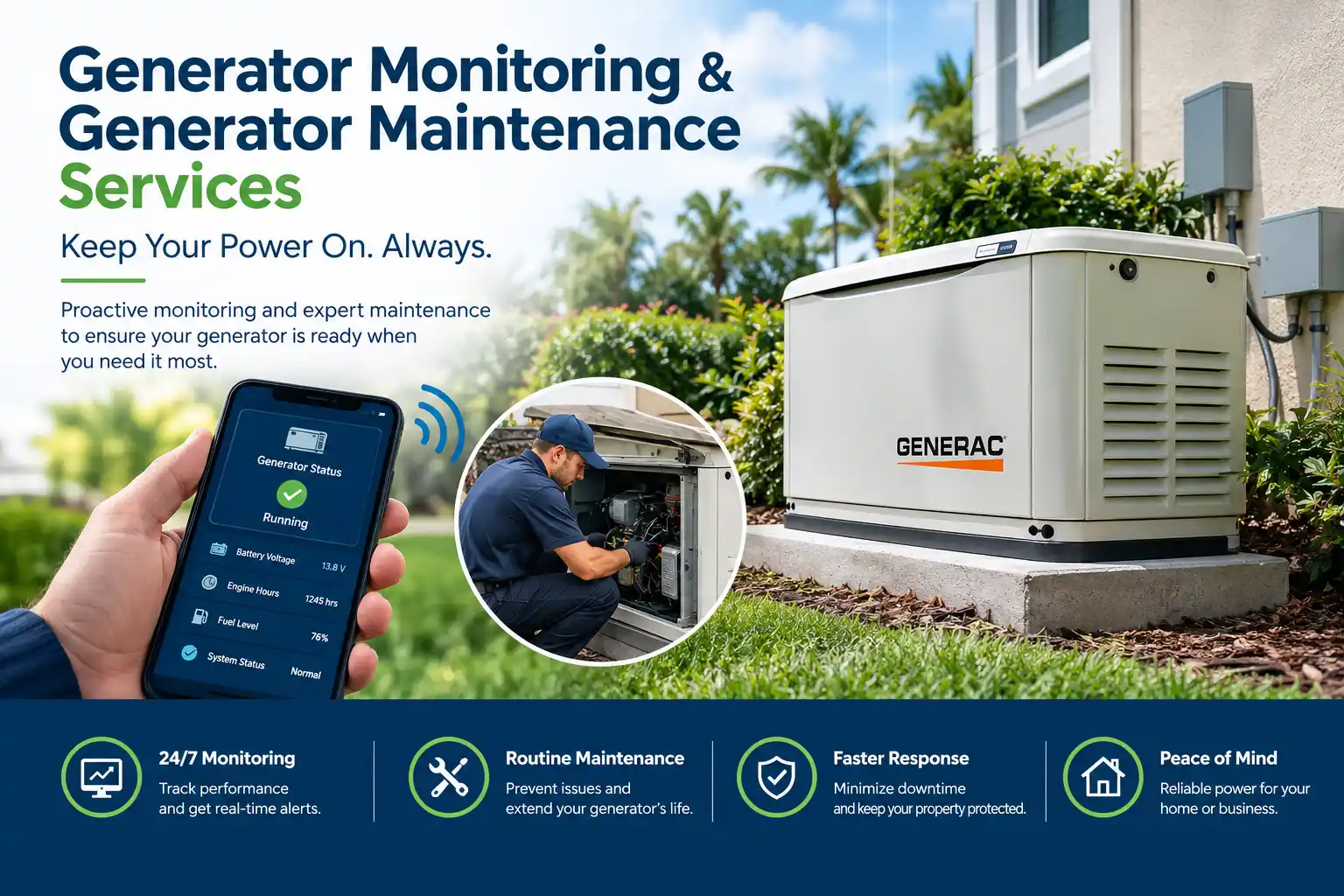
Modern monitoring solutions provide real-time visibility into critical parameters such as fuel levels, battery voltage, engine temperature, oil pressure, and run hours . For facilities with remote sites or limited on-site staff, this data is invaluable. Instead of waiting for a scheduled inspection to discover a failing battery or a fuel leak, monitoring services deliver instant alerts that allow your team to act before a small anomaly becomes a catastrophic failure .
The Synergy Between Monitoring and Load Testing:
- Pre-Test Diagnostics: Monitoring data can reveal trends—such as gradually declining battery voltage or abnormal temperature fluctuations—that indicate the generator may not be ready for a full load test. This allows technicians to address issues beforehand, preventing test aborts or equipment damage .
- Post-Test Verification: After a load bank test, monitoring services continue to track performance, confirming that any adjustments made during the test (such as governor tuning or cooling system repairs) are holding steady under normal operating conditions.
- Data-Driven Maintenance Planning: By correlating load test results with ongoing monitoring data, facility managers can optimize maintenance intervals, budget for repairs more accurately, and demonstrate compliance with regulatory requirements through comprehensive documentation .
For commercial facilities with multiple generators or geographically dispersed assets, remote monitoring provides a centralized dashboard that eliminates the need for physical inspections just to verify operational status. As one industry expert noted, “The ability to remotely verify that a generator is running properly is huge—you can’t afford to wait until the power goes out to find out your generator wasn’t properly maintained” .
Best Practices for Commercial Facilities
To maximize the value of load bank testing and monitoring, consider the following:
- Schedule Annual Load Bank Tests: At minimum, conduct a full load bank test annually for every emergency generator. For critical facilities like hospitals and data centers, consider more frequent testing based on NFPA 110 and Joint Commission requirements .
- Test at Full Rated Capacity: Ensure the test reaches 100% of the nameplate kW rating. Partial-load tests leave blind spots in your reliability profile .
- Integrate Monitoring Data: Use your Generator Monitoring services to track fuel consumption, battery health, and engine parameters continuously. Share this data with your load bank testing provider to create a complete picture of generator health .
- Document Everything: Maintain detailed records of load test results, monitoring alerts, and maintenance actions. This documentation is essential for compliance audits, insurance requirements, and long-term trend analysis .
- Address Findings Promptly: Load bank testing often reveals issues—wet stacking, cooling inefficiencies, voltage instability—that require follow-up. Prioritize repairs based on life-safety risk and operational criticality .
Conclusion
For commercial facilities, a standby generator is not just equipment—it is a promise. It is the promise that operations will continue, that patients will remain safe, that data will stay protected, and that tenants will not be left in the dark. Generator Load Bank Testing is how you verify that this promise can be kept. It exposes weaknesses under controlled conditions so you can fix them before an outage exposes them for you.
When combined with Generator Monitoring services, load bank testing becomes part of a continuous reliability loop—data-driven, proactive, and auditable. In an era where downtime carries escalating costs, investing in both is not just smart maintenance. It is essential risk management.
Do not wait for the utility to test your generator for you. Schedule your load bank test today, and let monitoring services keep watch in the meantime.
Recent Posts